Product Engineering
Why Industrial HMIs Fail, and How the 15.6-inch Windows Panel PC Is Built to Last
A field-oriented look at the STI-156CTPCW-Win: optical bonding, PCAP wet and glove touch, IP65 front sealing, and wide-temperature design against the failure modes that retire plant-floor HMIs.
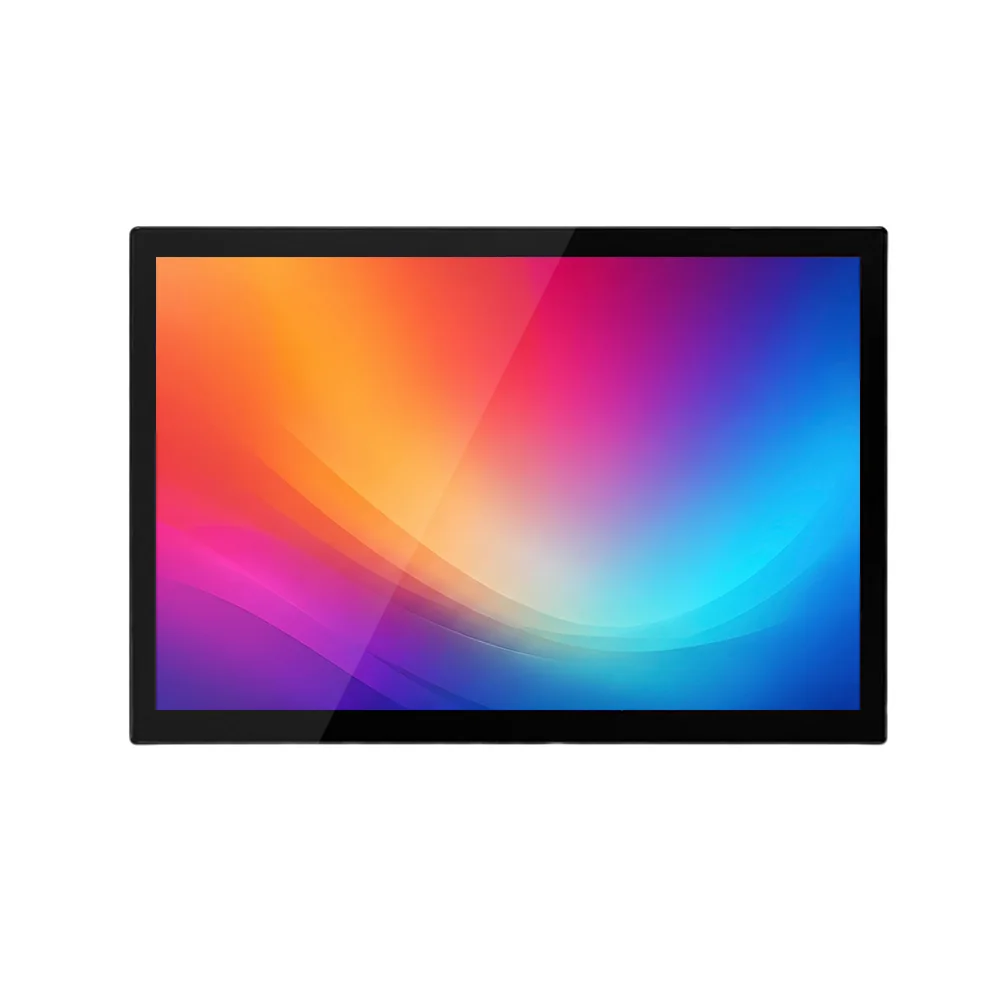
A production floor is one of the harshest places you can put a computer. Dust, coolant and cleaning fluids, electromagnetic noise from nearby motors and drives, vibration, temperature swings, and operation that never stops all conspire against a screen that was not built for it. When the human-machine interface (HMI) at the heart of a line fails, it does not just inconvenience an operator. It stops production.
That is the real test for any 15.6-inch industrial panel PC: not how it looks on a datasheet, but whether it keeps running, untouched, for years in conditions that would kill a consumer device. This article looks at why many industrial HMIs fall short, and how the KoreTouch STI-156CTPCW-Win is engineered against each of those failure modes.
Why many industrial HMIs fall short
Most field failures trace back to a short list of recurring problems:
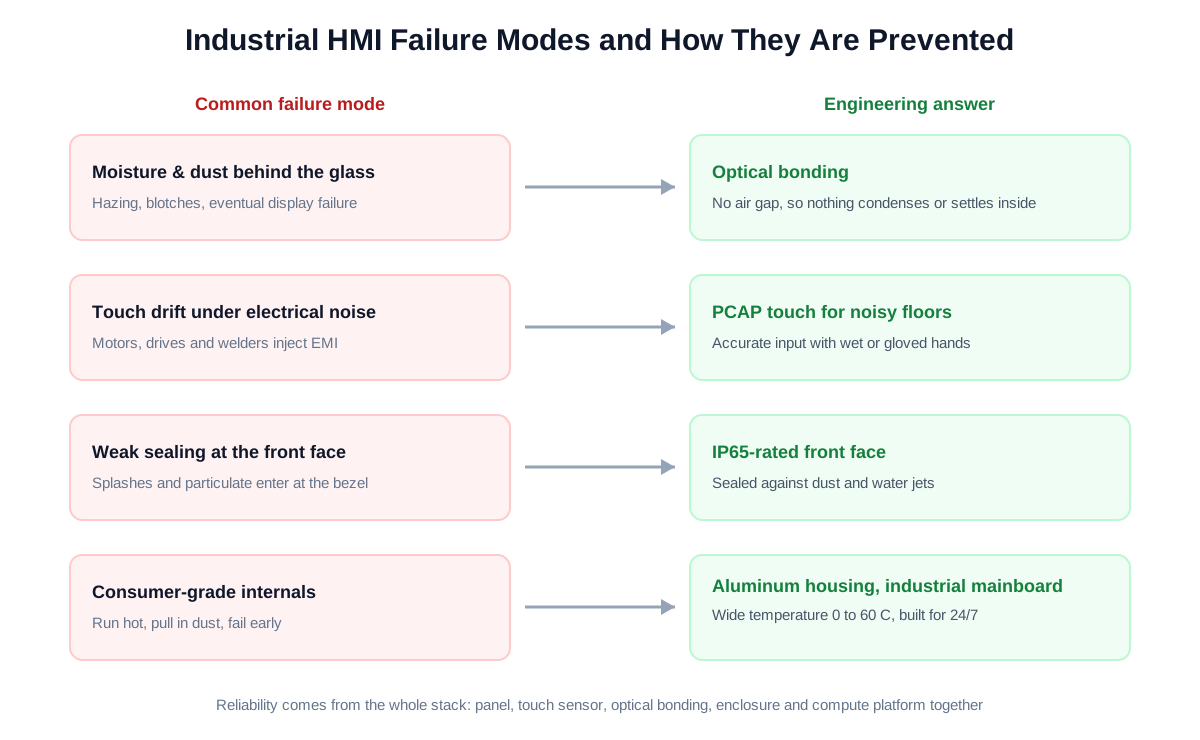
- Moisture and dust behind the cover glass. When there is an air gap between the touchscreen and the LCD, humidity can condense and dust can settle inside the stack. The result is a hazy, blotchy screen and, eventually, display failure.
- Touch that drifts under electrical noise. Motors, inverters, and welders flood a plant with electromagnetic interference. A poorly designed touch system loses accuracy or registers phantom presses.
- Sealing that does not match the environment. A front face that is not properly rated against washdown, splashes, or airborne particulate lets contaminants in at the bezel.
- Consumer-grade internals. Commercial parts and fans pull in dust, run hot, and are not rated for continuous duty or wide temperatures. They fail early in a setting they were never designed for.
Each of these turns into downtime and maintenance cost in a 24/7 operation. The fix is not a single feature. It is an integrated design where the panel, the touch sensor, the optical stack, the enclosure, and the compute platform are all specified for the environment.
How the STI-156CTPCW-Win is engineered against failure
Optical bonding removes the air gap
The single most important reliability choice is optical bonding. KoreTouch fills the gap between the cover glass and the LCD with a clear Wacker silicone adhesive, leaving no internal air layer. With the gap gone, moisture cannot condense and dust cannot settle inside the display, so the hazing and blotching that retire so many panels never start. The same bonded stack improves contrast and outdoor readability by removing internal reflections, adds impact resistance, and conducts heat away from the panel. On this model optical bonding is offered as a custom option, so it can be matched to the deployment.
PCAP touch that holds up, including wet and gloved hands
The STI-156CTPCW-Win uses a projected capacitive (PCAP) 10-point multi-touch sensor on tempered glass, with wet-touch and glove-touch support. Operators can work with gloves on or with a wet or splashed screen and still get accurate input, which is exactly where many touch systems break down on a plant floor. The surface is available with AR, AF, and AG treatment and a Mohs 7 hardness rating to resist glare, fingerprints, and scratches.
Sealing and a rugged enclosure
The front face is rated IP65 against dust and water jets, with an IP40 rating at the rear (align the sealing strategy with how the unit is mounted). The housing is aluminum, which is robust and helps dissipate heat, and the design targets continuous 24/7 operation across a 0 to 60 °C operating range with wide-temperature engineering. Brightness is 500 cd/m² as standard, with an option up to 1,500 cd/m² for bright or sunlit installations.
The specifications that matter
| Display | 15.6-inch, 1366 × 768 WXGA, 16:9, 16.2M colors, 500 cd/m² (up to 1,500 optional) |
|---|---|
| Touch | PCAP 10-point multi-touch, USB interface, wet and glove touch, tempered glass (AR / AF / AG optional, Mohs 7) |
| Processor | Intel Celeron J6412 quad-core (i3 / i5 / i7 optional) |
| Memory / storage | DDR4 4 GB and 64 GB SSD as standard (configurable) |
| Operating system | Windows 7 / 8 / 10 / 11, or Linux |
| Network | Gigabit Ethernet, Wi-Fi, Bluetooth |
| I/O | 1× HDMI, 1× VGA, 4× USB, 1× RJ45, audio in/out, 2× RS232 COM, DC input |
| Power | DC 12 V external adapter, up to about 52 W |
| Protection / build | IP65 front, IP40 rear, aluminum housing |
| Mounting | VESA 100 × 100 (4× M4); overall 374.4 × 238.0 × 53.8 mm |
| Environment | Operating 0 to 60 °C, storage −20 to 60 °C, 10 to 90% RH non-condensing |
The standard 1366 × 768 panel is sized for the job most HMIs actually do: dashboards, control screens, and line-side data entry that need clear, legible content rather than cinematic resolution. Where a project needs higher resolution, more memory or storage, or a brighter panel, those are available on request.
Connectivity built for real plant equipment
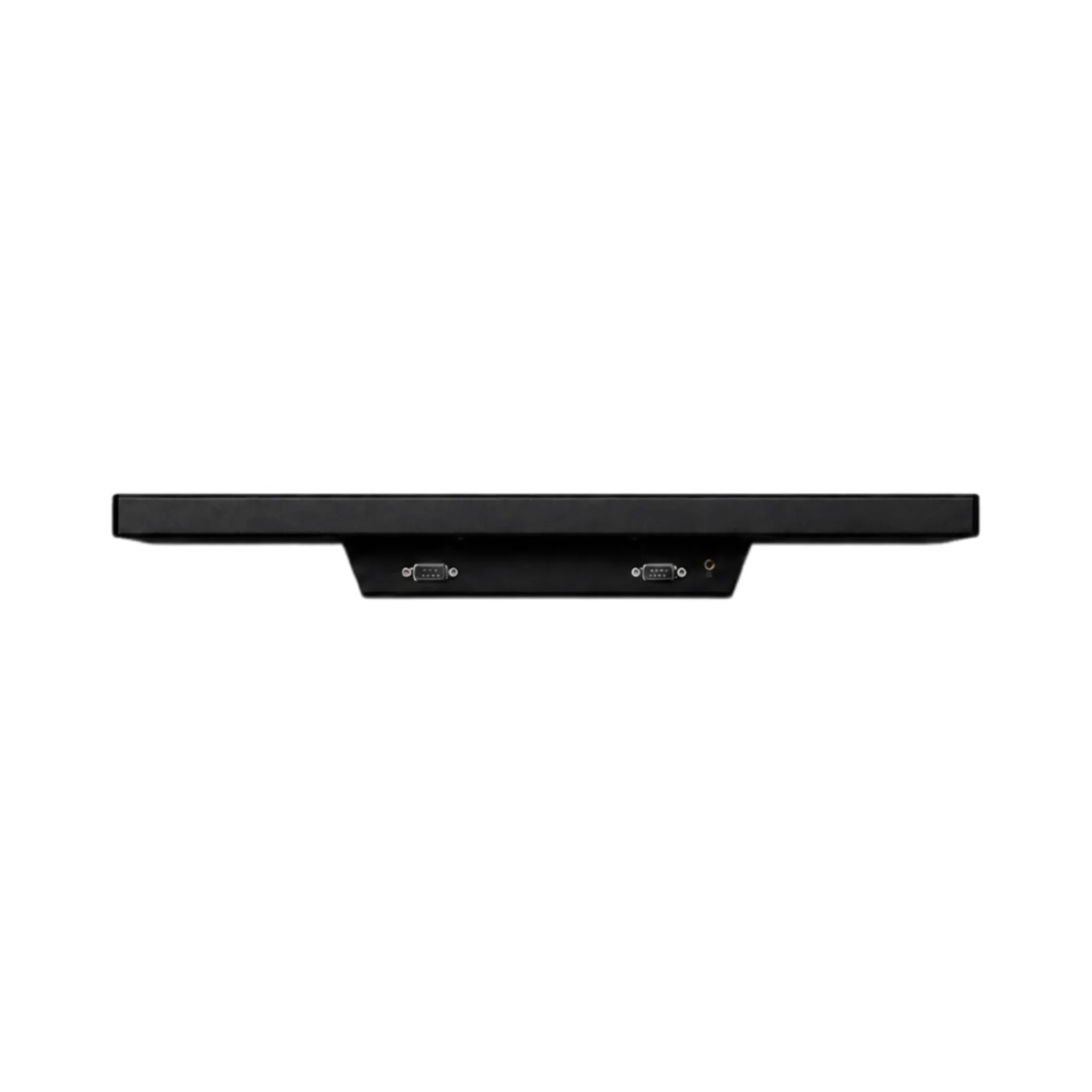
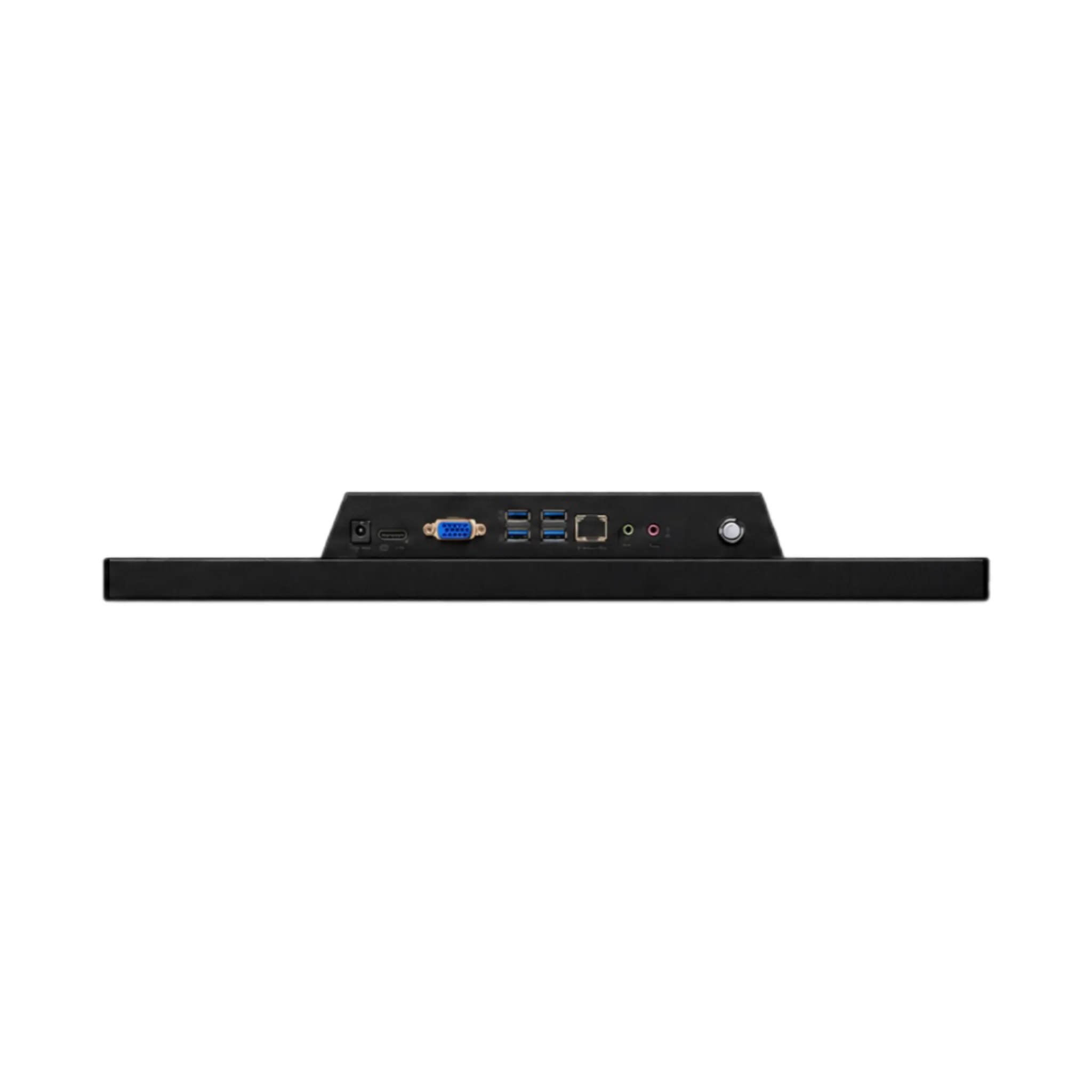
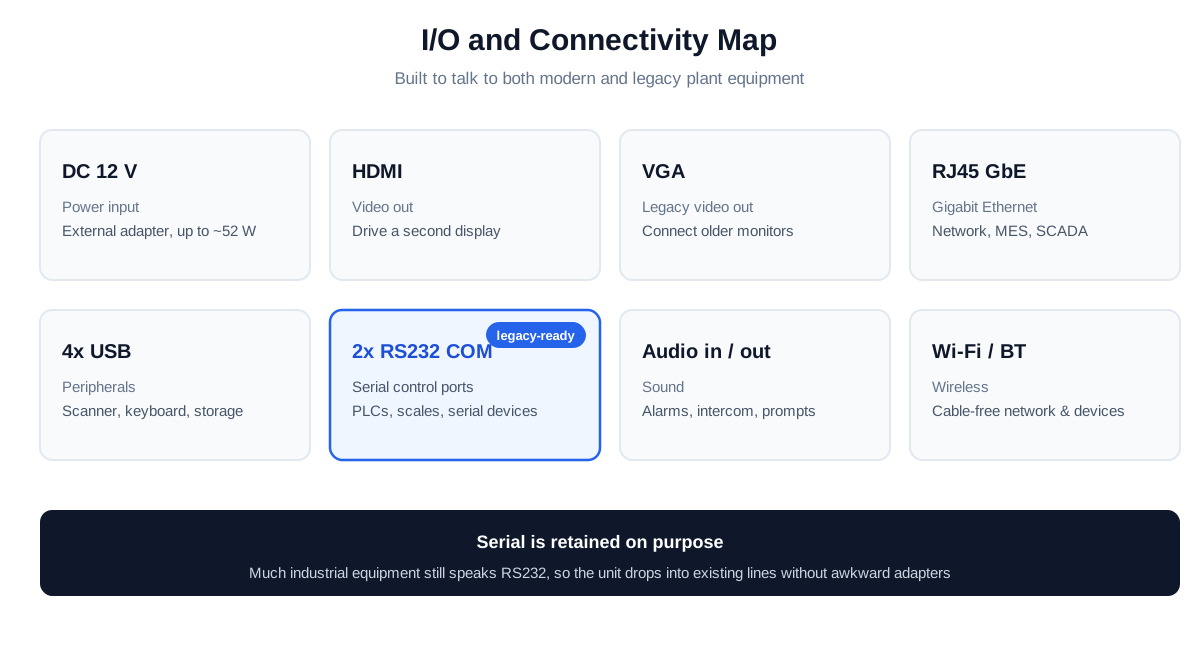
A control terminal is only useful if it can talk to the machines around it. Alongside HDMI, VGA, four USB ports, gigabit Ethernet, and wireless, the panel PC keeps two RS232 COM ports. That matters more than it sounds: a great deal of industrial equipment, from PLCs and scales to barcode and label hardware, still speaks serial. Dropping serial entirely, as many modern devices do, forces awkward adapters. Keeping it lets this unit slot into existing lines without rework.
Flexibility that fits your line, not the other way around
Two choices make this platform unusually adaptable. The processor scales from the standard Celeron J6412 up to Core i3, i5, or i7 when an application needs more compute, so you are not forced to over-buy or under-spec. And the operating system spans Windows 7, 8, 10, and 11 as well as Linux. That range is genuinely useful in industry, where a new terminal often has to run software validated years ago on an older OS, or drop into a Linux-based control stack, without a costly rewrite.
Beyond configuration, KoreTouch builds to the deployment. The team develops integration concepts directly from project requirements, without needing initial technical drawings. Share your targets for I/O, cover glass, IP rating, and certification, and those parameters are translated into an optimized optical and mechanical design, with bonding and sealing tuned for reliable field service.
Where it fits
- Factory HMI and MES terminals. Line-side control, work instructions, and production dashboards.
- Self-service kiosks and retail POS. A sealed, gloved-touch-capable front for public and semi-public settings.
- Warehouse and logistics stations. Field data capture and control where dust and handling are constant.
- Edge gateways. A compute node with serial, LAN, and wireless connectivity at the edge of the line.
Key takeaways
- Most industrial HMI failures come from dust and moisture behind the glass, touch drift under electrical noise, weak sealing, and consumer-grade internals.
- Optical bonding, PCAP wet and glove touch, IP65 front sealing, an aluminum enclosure, and wide-temperature design address those failure modes directly.
- Honest specs matter: the standard panel is WXGA 1366 × 768 at 500 nits, with higher resolution and up to 1,500 nits available on request.
- Retained RS232 serial plus a CPU range from Celeron to Core i7 and OS support from Windows 7 to 11 and Linux make it easy to fit existing and legacy lines.
- KoreTouch builds from your requirements, so the unit fits the deployment rather than forcing the deployment to fit the unit.
See the full specifications on the 15.6-inch Windows Industrial Panel PC page, explore the wider Windows industrial panel PC range, or contact the KoreTouch team for a custom configuration or quote.