Product Engineering
What Are Rugged Tablets Used For? A Guide for Industrial Buyers
On a factory floor, at an outdoor site, in a hospital ward, or inside a transit hub, a consumer-grade tablet rarely survives long. Drops, dust, oil, moisture, and electrical noise can each be enough to disable a touch...
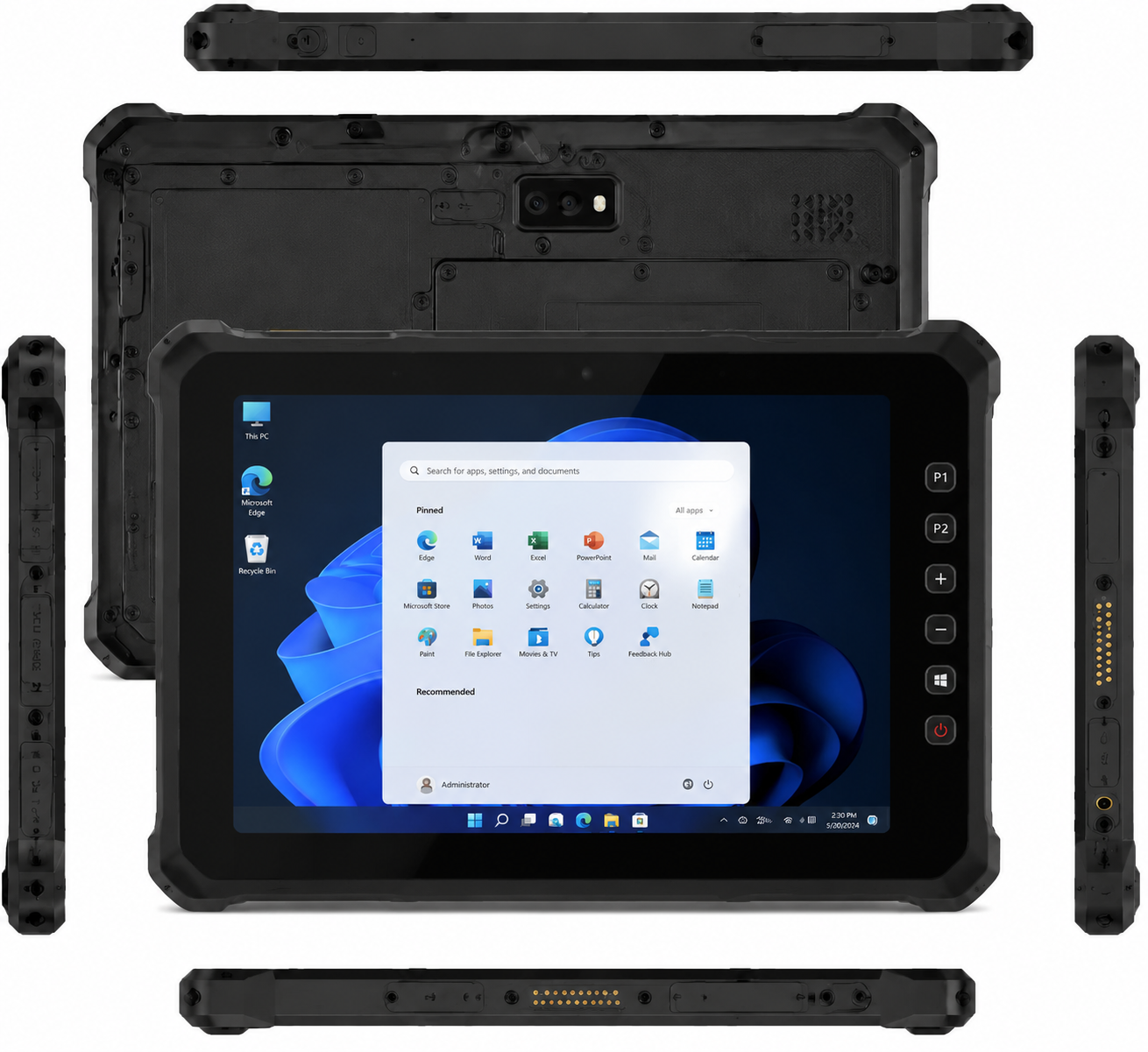
On a factory floor, at an outdoor site, in a hospital ward, or inside a transit hub, a consumer-grade tablet rarely survives long. Drops, dust, oil, moisture, and electrical noise can each be enough to disable a touchscreen or damage the mainboard. This is exactly the problem rugged tablets are built to solve: they are industrial-grade computing terminals engineered to keep running reliably through extreme temperatures, sustained vibration, heavy dust, and wet or contaminated environments. Drawing on more than a decade of experience in industrial touch and display manufacturing, KoreTouch wants to walk through where rugged tablets are actually deployed — and which specifications matter most when selecting one.
What Sets a Rugged Tablet Apart?
Unlike a consumer tablet, an industrial-grade rugged tablet is typically defined by:
High ingress protection. Most units carry an IP65-rated front panel, keeping out dust and resisting water jets — critical for dusty, humid, or wash-down environments.
Wide operating temperature range. Rugged tablets are validated to run reliably across a broad temperature window, whether that's an unheated outdoor kiosk in winter or a heat-generating production line.
Vibration and shock resistance. Mechanical structures are validated against sustained vibration and drop conditions encountered during transport, handling, and continuous field use.
Industrial-grade touch technology. Projected Capacitive (PCAP) touch supports glove operation, works through cover glass, and is engineered to reject water droplets and electrical noise — a decisive advantage in wet or oily conditions.
Fanless thermal design. Many industrial panel PCs and rugged tablets use fanless enclosures, preventing dust ingress through vents while lowering noise and failure rates.
Where Rugged Tablets Are Actually Deployed
- Industrial Automation & HMI
On automation lines, CNC control stations, and smart-factory training benches, rugged tablets and touch panel PCs serve as the primary human-machine interface. Operators need to touch and adjust parameters constantly, and the hardware has to keep working through vibration, oil residue, and dust — any freeze or false touch can interrupt an entire production line.
- Intelligent Transportation & Self-Service Terminals
Airport self-check-in kiosks and public transit information terminals face high-frequency public touch input alongside outdoor lighting and temperature swings. High-brightness, sunlight-readable rugged displays stay legible under direct light, making them essential for intelligent transportation deployments.
- Medical & Cleanroom Environments
Hospital wards, areas adjacent to operating rooms, and cleanroom production lines require frequent disinfection, placing high demands on a touchscreen's chemical resistance and sealing. Rugged tablets with strong ingress protection and easy-to-clean surfaces meet medical-grade hygiene standards without compromising the clinical team's touch experience.
- Retail & Commercial Premises
Retail point-of-sale counters and hospitality front desks may not face extreme conditions like a factory floor, but they demand the same long-duration, high-frequency reliability and touch responsiveness over years of continuous service.
- Financial Services & Security Monitoring
Trading floors and security operations centers rely on touch displays and rugged tablets for real-time monitoring and data interaction, where uptime and long-term dependability are near-mandatory requirements.
What to Evaluate When Selecting a Rugged Tablet
Choosing a rugged tablet shouldn't stop at price and headline specs — it should be evaluated through the lens of total cost of ownership (TCO):
- Verified protection ratings. Confirm IP rating and operating temperature range against third-party test reports, not marketing claims.
- Touch technology fit. Check whether the touchscreen supports glove operation and resists water and electrical noise — this directly determines usability in humid or glove-heavy environments.
- Optical bonding process. Displays built with LOCA (Liquid Optical Clear Adhesive) full lamination reduce glare, improve outdoor readability, and strengthen impact resistance by eliminating the air gap where moisture and fogging can otherwise form.
- Supplier process and quality systems. Look for cleanroom production conditions and fully traceable quality control — this is what determines batch-to-batch consistency and long-term reliability.
- Customization capability. Enclosure cutouts, brightness targets, sizing, and I/O layout requirements vary widely by industry. A supplier offering OEM/ODM support from prototype through mass production often determines how smoothly a project gets deployed.
- Long-term supply and after-sales support. Industrial projects run on long timelines — a partner that can guarantee stable long-term supply and technical support helps avoid the risk of a mid-project discontinuation.
Why KoreTouch
KoreTouch has spent more than a decade focused on industrial touch displays and industrial panel PC manufacturing, backed by a 4,000+ m² production facility, a Class 1,000 cleanroom, and advanced LOCA optical bonding technology — ensuring every display meets industrial-grade reliability and clarity standards. Our products serve industrial automation, intelligent transportation, medical, retail, and financial services applications, and our team can tailor PCAP touch tuning, panel sourcing, and final assembly to your production environment, certification requirements, and appearance needs — a one-stop path from spec to deployment. The goal: hardware that performs the same in the field as it did in the lab.
Whether you're specifying an HMI terminal for a production line or sourcing a customized rugged tablet solution for a transportation or medical program, KoreTouch's engineering team is ready to support you from initial selection through prototype validation.
Get in touch with our team for a rugged tablet recommendation and quote tailored to your application: sales@koretouch.com · +86 139 2526 0744 · www.koretouch.com
Reliable touch, every time.
Work with KoreTouch
See Industrial Panel PCs, Optical Bonding. Contact us at sales@koretouch.com.