Product Engineering
Outdoor Touchscreen Seal Aging: Does Water Ingress or Touch Drift Show Up First?
A field engineering answer to a question every outdoor-kiosk operator eventually asks — and why the first symptom of seal failure is rarely the one you expect.
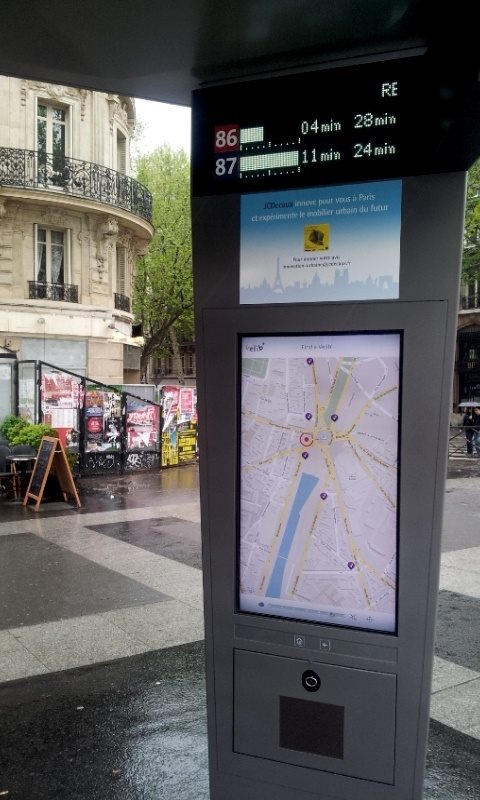
In outdoor kiosks, fuel-station displays, transit signage, access-control terminals, and unattended retail cabinets, outdoor touchscreen seal aging is behind more "unexplained" field failures than any other single cause. Operators usually notice the symptom long before they identify the source: the screen starts missing taps, or registering touches no one made. This article answers a question that comes up constantly in the field but is rarely explained end to end — when the front seal on an outdoor touchscreen degrades, does the unit fail by leaking water first, or by drifting first?
The Short Answer: Drift Comes First, Visible Water Ingress Comes Later
In practice, outdoor touchscreen seal aging almost always produces touch drift, false triggers, and ghost touches well before any visible water ingress. The reason is that seal degradation is a gradual, continuous process, not a binary switch — a gasket does not go from fully sealed to leaking overnight. There is a long intermediate stage where the seal is compromised but the failure is still invisible to the eye.
To understand why, it helps to revisit how projected capacitive (PCAP) touch actually works. A PCAP sensor reads capacitance changes across a grid of row and column electrodes beneath the cover glass, and an industrial controller combines self-capacitance and mutual-capacitance data to tell a real fingertip apart from other conductive contact on the surface. In the early stages of outdoor touchscreen seal aging, the gasket only shows fine cracking, reduced elasticity, and permanent compression set — the gap is nowhere near large enough to let liquid water through, but it is already enough to let trace moisture and condensation, driven by day-night temperature swings, migrate into the bezel seam or the edge of the bonding layer. That trace moisture leaves no visible evidence, yet it is enough to continuously disturb node-level capacitance, producing coordinate offset, mis-registered taps, multi-touch drift, and even phantom touches with no contact at all.
In other words, the first observable symptom of outdoor touchscreen seal aging is almost never a water stain or internal fogging — it is a support ticket that reads "touch is inaccurate," "it drifts more the longer it runs," or "it registers taps on its own." Only once the gasket has hardened, cracked further, and lost essentially all of its compression recovery does the gap widen enough to let liquid water penetrate the structure directly. By the time a unit reaches this point, the fix is rarely a recalibration — it typically means a teardown repair or a full unit replacement.
Why the Sequence Runs This Way: The Material Science Behind Seal Aging
Outdoor touchscreen seal aging is fundamentally a materials problem, driven by three environmental factors:
- UV exposure. Sustained sunlight causes photo-oxidative chain scission in rubber and silicone gaskets, hardening and embrittling the surface and destroying the elastic recovery the seal depends on.
- Thermal cycling. Outdoor equipment experiences large day-night and seasonal temperature swings. Repeated expansion and contraction accumulates compression set in the sealing material, steadily reducing the contact force between the gasket and the housing.
- Ozone and chemical exposure. Ambient ozone, exhaust, and cleaning agents accelerate rubber aging and produce surface cracking over time.
Together, these factors give outdoor touchscreen seal aging a characteristic non-linear profile: slow, barely perceptible degradation for a long stretch, followed by a sharp acceleration once a critical threshold is crossed. This is exactly why so many units appear to fail "suddenly" with widespread water ingress — the seal was already degrading months or even years earlier, but the only symptom was intermittent touch drift, which was repeatedly treated as a software issue and never traced back to the seal.
Seals Are One Layer in a Full Stack — and Often the First One Breached
A properly engineered outdoor touch display is a layered system, from the outside in: surface treatment (AR/AF/AG coatings), tempered cover glass, an optical bonding layer, the PCAP sensor, the LCD module, and the sealing and enclosure design that wraps the whole assembly. Optical bonding — filling the air gap between the cover glass and the LCD with a clear silicone adhesive (LOCA) — removes the internal cavity where condensation and dust would otherwise collect, and functions as an important layer of redundancy against outdoor touchscreen seal aging. But the front and perimeter gasket remains the first mechanical barrier against liquid water and dust entering from outside. Once that barrier fails, no amount of internal optical bonding will indefinitely prevent moisture that keeps finding its way in from eventually disturbing touch signal stability.
Industrial PCAP controllers also carry their own built-in defense: water rejection. By reading self- and mutual-capacitance together, the controller can distinguish the broad, diffuse signal of a water film from the localized, finger-shaped signal of a real touch, keeping input usable under rain or a wet wipe-down. But this algorithmic compensation has real limits — it is designed for surface moisture, not for the sustained internal intrusion caused by long-term outdoor touchscreen seal aging. As the seal degrades further, moisture moves from the surface to the space near the electrode layer itself, and algorithmic compensation gradually loses ground.
Field Diagnosis: Recognizing Early-Stage Seal Aging
Rather than waiting for the terminal failure — visible water ingress — operations and procurement teams should build early indicators of outdoor touchscreen seal aging into routine inspection:
- Touch response showing coordinate offset, or tap zones that no longer match the actual contact point.
- Self-triggering touches with no physical contact (ghost touches).
- Gasket material that has visibly hardened, discolored, or developed fine surface cracking, with no elastic rebound.
- Widening or uneven gaps at bezel seams.
- Failure rates that spike in a clear seasonal pattern tied to large day-night temperature swings.
Any one of these, observed consistently, should be treated as evidence that outdoor touchscreen seal aging has reached a stage requiring intervention — not as a reason to simply reboot the unit or recalibrate the touch parameters and move on.
Reducing the Risk at the Sourcing Stage
IP ratings are too often evaluated in isolation during procurement, as a single number to compare across quotes. In reality, gasket material, cover glass thickness, optical bonding process, and touch controller tuning all need to be specified as one system. When evaluating an industrial touchscreen supplier, confirm the following:
- Certification and test documentation. CE, FCC, and RoHS compliance; an ISO 9001 quality system; and, ideally, environmental and sealing reliability test reports you can actually review.
- In-line quality control. Incoming inspection, in-process checks, aging and burn-in testing, and outgoing functional testing as standard practice — with sealing performance included as a tested parameter, not an assumption.
- Industrial-grade construction. Wide-temperature, industrial-grade components, and a sealing structure that is engineered together with optical bonding, rather than a generic gasket added on as an afterthought.
- Customization capability. The ability to specify sealing material and IP rating to match the deployment — coastal/high-salinity, high-altitude/high-UV, extreme cold — instead of a single fixed configuration for every application.
- Total cost of ownership. Comparing unit price alone misses the larger cost: field failures, downtime, and repairs driven by outdoor touchscreen seal aging over the life of the deployment.
The KoreTouch Engineering Approach
KoreTouch designs and manufactures industrial PCAP touchscreens and industrial panel PCs, and is ISO 9001 and ISO 14001 certified, recognized as a National High-Tech Enterprise, and compliant with CE, FCC, and RoHS. On the construction side, KoreTouch performs optical bonding in a Class 1,000 cleanroom using Wacker silicone LOCA, eliminating the air gap between cover glass and LCD. The touch controller is tuned for wet-touch and glove-touch operation, and the sensor, cover glass, and controller settings are matched as a system.
More importantly, KoreTouch treats sealing structure, IP rating, cover glass selection, and touch tuning as one integrated system to be specified from the outset — not as a generic gasket that gets swapped in after the fact. That is the correct engineering response to outdoor touchscreen seal aging.
If your deployed units are already showing touch drift, ghost touches, or mis-registered taps, don't treat it purely as a software problem — it is very likely the first warning sign of outdoor touchscreen seal aging. Whether you are specifying a new outdoor industrial display program or need a retrofit strategy, our engineering team can help with sealing material, IP rating, optical bonding, and touch controller tuning for your panel PC.
Contact us at sales@koretouch.com