Solutions
Driving the Future of Smart Mobility: How KoreTouch Optical Bonded Vehicle Displays Enhance the Passenger Experience
LOCA optical bonding for transit HMIs—higher transmission, lower reflectance, glove-ready PCAP, and industrial durability for buses, metro, and rail deployments.
In buses, trams, metro systems, and urban rail transit, vehicle-mounted displays have evolved far beyond simple information screens. They now serve as essential interactive interfaces connecting passengers with transit operators.
Real-time arrival information, route guidance, multimedia content, and emergency notifications all rely on continuous advancements in display reliability, visual performance, and user interaction.
KoreTouch develops optical bonded display solutions built for constant vibration, extreme temperature swings, and direct sunlight—delivering outstanding image quality and precise touch performance for intelligent transportation.
The Growing Demand for Vehicle-Mounted Displays in Public Transportation
As smart city initiatives expand, demand for industrial-grade displays in buses, stations, and metro networks continues to grow. Passengers rely on digital information throughout their journey—from route planning to service announcements.
Vehicle-mounted displays face vibration, dust, moisture, wide temperatures, and rapidly changing ambient light. KoreTouch covers 5″ to 86″ portfolios spanning industrial panel PCs, industrial monitors, and bar-type LCD displays for vehicles and hubs.
Core Technology Advantages
1. LOCA Optical Bonding for Maximum Display Performance
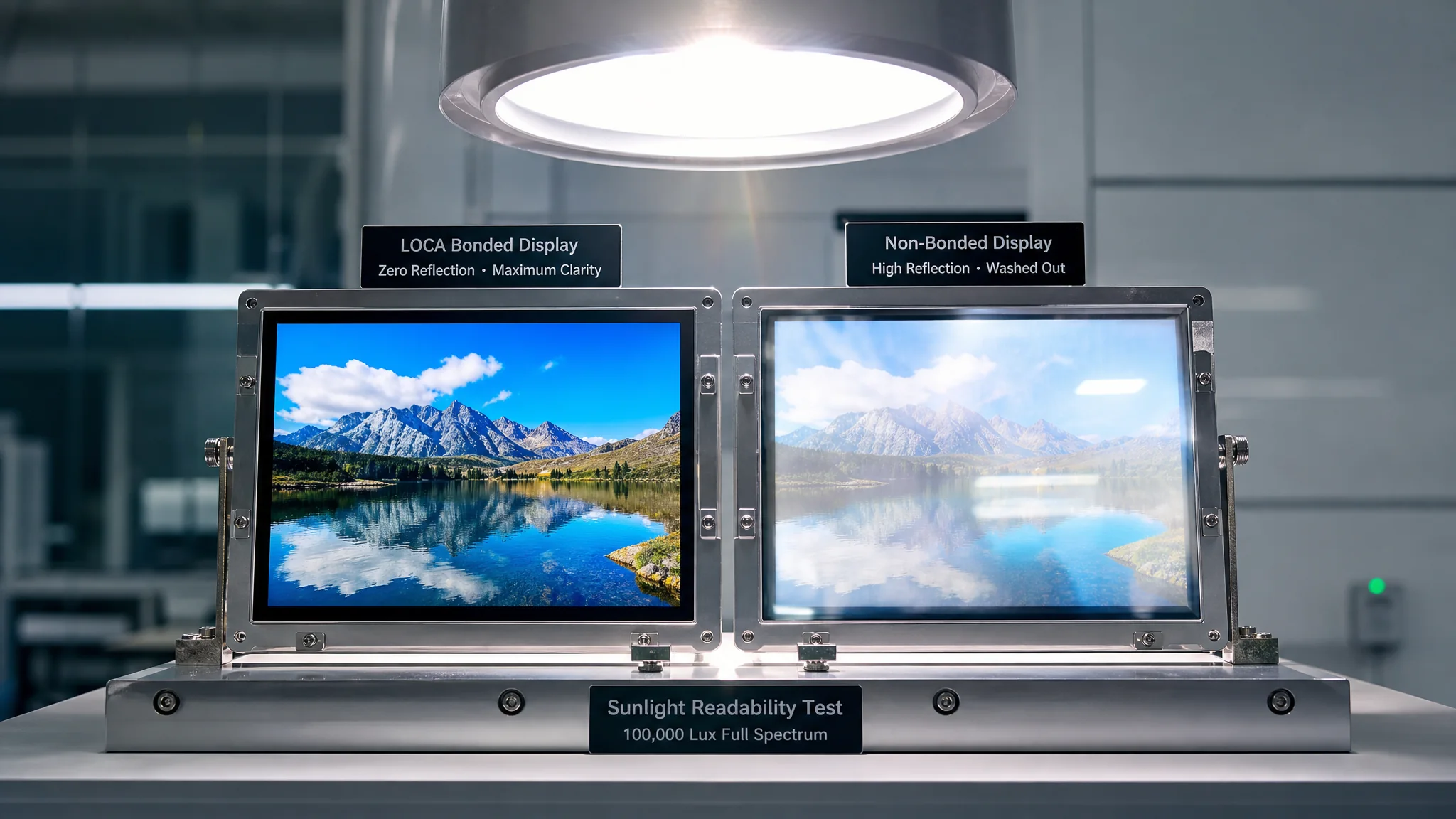
LOCA bonding eliminates the air gap between the LCD and cover glass. Compared with air-bonded displays, typical gains include light transmission ≥98%, surface reflectance ≤1.5%, color performance improved by more than 30%, and a 178° ultra-wide viewing angle—keeping passenger information readable under strong sunlight.
2. Industrial-Grade Durability
- Fully enclosed metal housing with die-cast aluminum alloy construction
- IP65-rated protection against dust and water ingress
- Fanless cooling for improved reliability
- Wide operating temperature from −30°C to 70°C (optional −40°C to 80°C)
- Strong shock resistance and EMI protection for continuous transit duty
3. High-Precision PCAP Touch
- Touch response time ≤3 ms
- Touch accuracy ±0.5 mm
- Multi-touch support
- Compatible with gloves and stylus operation
Built for Safety Through Rigorous Testing and Advanced Materials
Tempered cover glass and optimized optical bonding maximize impact resistance (IK rating) while reducing maintenance risk in public environments.
Surface options include Anti-Glare (AG), Anti-Reflective (AR), and Anti-Fingerprint (AF), improving outdoor readability and hygiene under high-frequency public use.
Optical bonding is completed in Class 100 cleanroom facilities with full IQC/IPQC/FQC/OQC inspection—100% inspection rather than sampling.
Why Optical Bonding Is Ideal for Smart Transportation Displays
Air-bonded stacks can suffer condensation, dust ingress, and optical loss under humidity and temperature swings. LOCA bonding removes the air gap, preventing fogging and improving thermal management.
Although bonding raises upfront manufacturing cost, lower failure rates, long service life (up to 50,000 hours), and reduced maintenance cut total cost of ownership for transit operators.
Empowering the Future of Intelligent Transportation
From metro vehicle displays and bar-type bus signage to high-brightness outdoor screens at bus stops, stations, airports, and hubs, KoreTouch covers virtually every transportation scenario—with customization, wide-voltage low-power design, and AI edge computing compatibility.
Work with KoreTouch
Explore Optical Bonding, Intelligent Transportation, and Bar Type LCD Displays. Contact us at sales@koretouch.com for a customized solution.